Spend More Time in the Forest. See More. Understand More.
Imagine walking through the ancient forests of Uganda before sunrise.
The forest is still waking up. Birds are calling from the canopy. Leaves rustle somewhere above you. Then suddenly—
A loud chimpanzee call breaks through the trees.
Your guide looks up.
The trackers move quickly.
And you follow.
This isn’t a quick wildlife sighting where you glance at a chimpanzee and move on.
Chimpanzee habituation gives you time.
Time to follow a chimpanzee community through the forest. Time to watch
them feed, groom, play, communicate and interact. Time to observe behaviours that you simply cannot appreciate during a one-hour trek.
If you’re looking for one of Uganda’s most immersive wildlife experiences, chimpanzee habituation deserves a place on your 2026 travel list.
What Exactly Is Chimpanzee Habituation?
Chimpanzee habituation is a carefully managed conservation process where wild chimpanzees gradually become accustomed to the presence of humans without being trained, fed or domesticated.
Visitors participating in a habituation experience join researchers, trackers and experienced guides as they follow a chimpanzee community that is still undergoing habituation.
And here’s the big difference:
Regular chimpanzee trekking
You generally have a limited viewing period once the chimpanzees are located.
Chimpanzee habituation
You can spend several hours following and observing the chimpanzees, depending on the specific program and current regulations.
That extra time changes everything.
Instead of simply asking, “Did we see the chimps?”, you’re able to experience:
What are they doing? Where are they going? Why are they calling? How are they interacting with each other?
That’s what makes habituation so special.
Where Can You Experience Chimpanzee Habituation in Uganda?
Uganda is one of Africa’s premier destinations for wild chimpanzee experiences, with two particularly important forest destinations.
- Kibale National Park
Often described as the “Primate Capital of the World,” Kibale is one of Uganda’s most famous primate destinations.
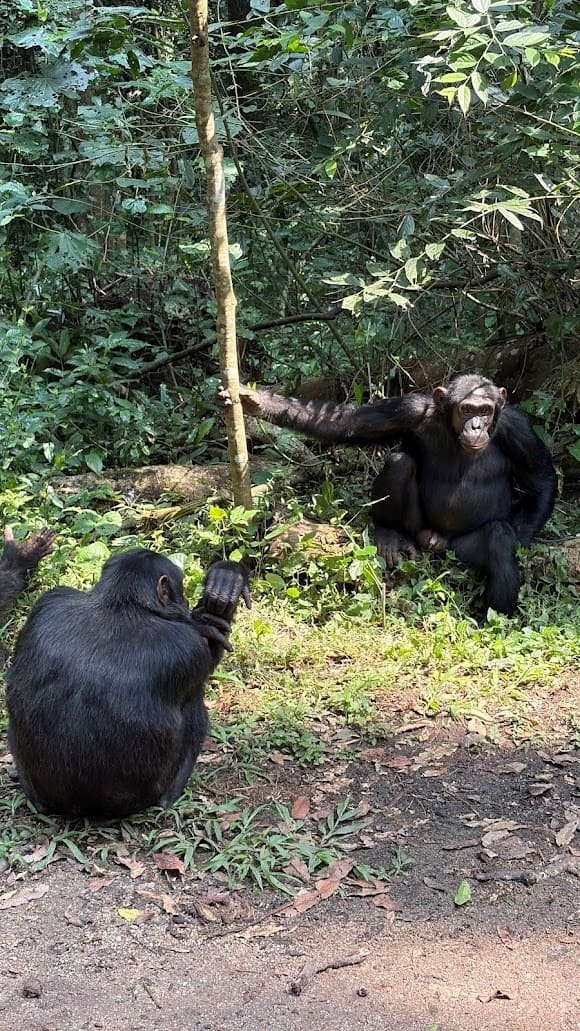
The forest is lush, dense and incredibly biodiverse.
You aren’t simply entering a forest to look for chimpanzees. You’re entering an entire ecosystem alive with monkeys, birds, butterflies, trees and the sounds of the forest.
Kibale is particularly appealing to travelers who want to combine chimpanzee experiences with other primate encounters and broader Uganda wildlife adventures.
Our tip: If chimpanzees are high on your Uganda bucket list, give Kibale more than a rushed stop. The forest rewards travelers who slow down.
- Budongo Forest
Located within the greater Murchison Falls conservation landscape, Budongo Forest offers another fascinating opportunity to encounter wild chimpanzees.
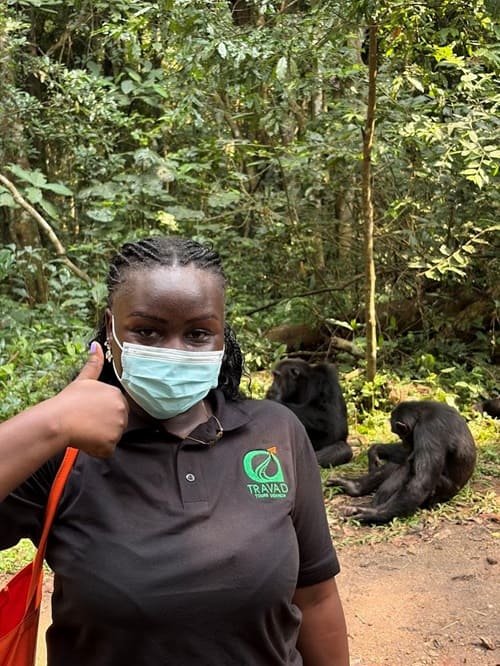
For travellers already exploring Murchison Falls National Park, Budongo can be an excellent addition to an itinerary.
The experience can feel quieter and particularly appealing to visitors interested in the connection between wildlife, research and conservation.
Why Are Chimpanzees So Fascinating?
Chimpanzees are among our closest living relatives.
Their intelligence and complex social lives make watching them in the wild incredibly rewarding.
They communicate through vocalisations, gestures and body language. They form social relationships, groom one another, care for their young and use tools in certain situations.
And because their behaviour isn’t scripted, you never quite know what the forest is going to show you.
During habituation, you could witness:
🍌 Chimpanzees feeding on wild fruits
🤝 Grooming and social bonding
🌳 Movement through the forest canopy
🐒 Young chimps playing and chasing one another
📣 Powerful vocalisations echoing through the forest
👀 Curious interactions within the group
🦍 Hunting or other natural feeding behaviours, depending on the community and circumstances
One moment the forest can feel peaceful.
The next?
CHAOS.
Branches shaking. Chimpanzees calling. Trackers moving quickly.
And suddenly you’re running through the forest trying to keep up.
Welcome to chimpanzee habituation.
The Science Behind Chimpanzee Habituation
Habituation isn’t simply about making chimpanzees comfortable around tourists.
It is a long-term conservation and research process.
Researchers and trackers gradually spend time around chimpanzee communities so that the animals become accustomed to human observers while continuing their natural behavior.
This can support:
- Scientific research
- Monitoring chimpanzee populations
- Understanding social behavior
- Monitoring health and welfare
- Conservation planning
- Responsible wildlife tourism
For travelers, this creates something particularly special:
You aren’t just observing wildlife. You’re getting a glimpse into the work that helps us understand and protect it.
When Is the Best Time for Chimpanzee Habituation?
The good news?
Chimpanzee experiences are available throughout the year.
But Uganda’s seasons can influence forest conditions, hiking difficulty and wildlife behavior.
☀️ JUNE – SEPTEMBER
The popular dry season
Generally more comfortable for hiking, with less rainfall and easier trail conditions.
Great for:
- First-time visitors
- Longer forest walks
- More comfortable trekking conditions
- Combining chimpanzees with other Uganda activities
☀️ DECEMBER – FEBRUARY
Another excellent dry-season window
Expect generally favourable conditions and less muddy terrain.
This is a strong option for travellers looking for comfortable forest trekking and photography.
🌧️ MARCH – MAY
Green season
Rain can make the trails muddy and slippery—but don’t write this season off.
The forests become incredibly lush, and fewer visitors can mean a quieter experience.
There can also be plenty of food available for chimpanzees, which may influence where and how they move.
Best for:
- Lush landscapes
- Fewer crowds
- Photographers
- Travelers who don’t mind getting a little muddy!
🌦️ OCTOBER – NOVEMBER
Short rains and fewer crowds
A nice middle ground for travellers looking for greener landscapes and potentially fewer visitors.
What Does a Chimpanzee Habituation Day Look Like?
This is where the adventure really begins.
Your day can start very early—sometimes before sunrise.
Why?
Because chimpanzees are already getting on with their day.
You may enter the forest while the chimpanzees are still in or around their nesting areas and begin tracking their movements.
Your team may include:
- Experienced trackers
- Researchers
- Professional guides
You’ll be looking for signs of chimpanzee activity and listening carefully for their calls.
Then the chase begins.
You may walk through thick vegetation, climb slopes, cross muddy sections and stop repeatedly to listen.
And when you finally find them?
Don’t expect them to pose for you.
Chimpanzees move.
A lot.
Life in the Forest: Expect the Unexpected
Chimpanzee habituation is dynamic.
You could spend several minutes watching a chimpanzee peacefully feed in a tree…
…only to suddenly hear a series of loud calls from somewhere deeper in the forest.
Your guide takes off.
You follow.
That’s part of the magic.
Unlike gorillas, chimpanzees can be highly mobile and may move quickly through both the canopy and forest floor.
So come prepared to:
Walk. Listen. Watch. Move. Repeat.
It’s wildlife viewing—but with an adventure component.
Can You Take Photos?
Absolutely—but responsible photography is essential.
Follow the instructions of your guide and the applicable park or conservation rules.
Remember:
The goal is to observe wildlife without disturbing it.
Avoid flash photography where prohibited, don’t attempt to touch the chimpanzees, and never try to attract them for a better photograph.
Sometimes the best photograph is the one you take with your eyes.
And trust us…
You’ll remember the moment long after your camera battery dies.
Chimpanzee Habituation Rules & Safety
Wild chimpanzees are exactly that:
WILD.
Responsible encounters therefore follow strict guidelines designed to protect both visitors and chimpanzees.
Depending on the destination and current regulations, expect rules covering:
- Minimum viewing distances
- Group sizes
- Time spent with chimpanzees
- Hygiene and illness precautions
- Photography
- Food and personal items
- Following guide and ranger instructions
One rule is especially important:
Never visit chimpanzees when you’re unwell.
Primates can be susceptible to human illnesses, so protecting their health is just as important as protecting yours.
How Much Does Chimpanzee Habituation Cost?
Chimpanzee habituation is generally more expensive than a standard chimpanzee trekking experience because you’re paying for a longer, more specialized experience.
Prices and permit requirements can change, so always confirm the current rate and regulations for your travel dates before booking.
For 2026 travel, your safari operator should confirm:
- Current permit price
- Park fees
- Available habituation dates
- Start time
- Duration
- Applicable conservation rules
At Travad Tours Uganda, we can help you build the chimpanzee experience into a complete Uganda itinerary rather than treating it as a standalone activity.
What Should You Pack?
The forest doesn’t care whether you’re fashionable.
It cares whether your shoes have grip. 😄
For chimpanzee habituation, pack:
🥾 Good hiking boots – preferably waterproof with strong grip
👕 Long-sleeved clothing – protection from vegetation and insects
🧥 Rain jacket – tropical forests can surprise you
🦟 Insect repellent
💧 Drinking water
🥪 Snacks
🎒 Small daypack
📷 Camera and extra batteries
🧢 Hat or cap
And don’t forget:
Dress for the forest, not the Instagram post.
How Fit Do You Need to Be?
Let’s be honest.
Chimpanzee habituation isn’t a walk in the park.
Well…
Technically, it is a walk in a national park.
But you get the point. 😄
The terrain can be uneven, steep, muddy and slippery. Chimpanzees may also move quickly, meaning you could cover significant distances during the experience.
You should be comfortable with:
- Long walks
- Uneven terrain
- Slopes
- Humid conditions
- Occasional rain
- Moving at different speeds
The good news?
You don’t have to be an elite athlete.
Experienced guides work with visitors and help manage the pace and route as much as possible.
Chimpanzee Habituation vs. Chimpanzee Trekking
Still wondering which experience is right for you?
Here’s the simple version:
| Chimpanzee Trekking | Chimpanzee Habituation |
| Shorter wildlife encounter | Extended forest experience |
| Generally easier | More physically demanding |
| Focused on finding and observing habituated chimps | Focused on extended observation of a habituating community |
| Great for first-time visitors | Great for wildlife enthusiasts and researchers |
| More time-efficient | More immersive |
Our verdict?
If your Uganda itinerary allows the extra time and you’re genuinely passionate about wildlife, chimpanzee habituation is hard to beat.
Why Chimpanzee Habituation Is Worth It
There are safaris where you see animals.
And then there are experiences where you enter their world.
Chimpanzee habituation is the latter.
It gives you the opportunity to slow down and observe behavior rather than simply ticking an animal off your wildlife checklist.
You experience the forest differently.
You listen differently.
You notice movement in the canopy.
You start recognizing calls.
You begin to understand the relationships within a chimpanzee community.
And somewhere along the way, the experience stops being:
“I went to see chimpanzees.”
And becomes:
“I spent a day in the forest following chimpanzees.”
That’s a story worth taking home.
Why Add Chimpanzee Habituation to Your Uganda Safari?
Because Uganda isn’t just about gorillas.
It is about rainforests, savannahs, rivers, mountains, cultures and extraordinary wildlife experiences.
Imagine combining chimpanzee habituation with:
- Gorilla trekking in Bwindi
- Wildlife viewing in Queen Elizabeth National Park
- The spectacular Murchison Falls
- Forest adventures in Kibale
- Wildlife encounters across Uganda’s savannahs
- Community and cultural experiences
You can turn a single chimpanzee experience into a multi-destination Uganda adventure.
And that’s exactly where we come in.
Ready to Meet Uganda’s Chimpanzees?
At Travad Tours Uganda, we don’t believe your safari should feel like a checklist.
We design experiences around what you actually want to feel, see and discover.
Whether you’re a wildlife enthusiast, photographer, conservation traveller, first-time visitor to Uganda or simply someone who wants an unforgettable adventure, we’ll help you create an itinerary that works for you.
Your forest adventure is waiting.
Ready to spend more time with Uganda’s wild chimpanzees?
Talk to Travad Tours Uganda and start planning your chimpanzee habituation experience.
Contact us: Tell us your preferred travel dates, number of travelers and what else you’d like to experience in Uganda.
Don’t just visit Uganda. Experience it.
Travad Tours Uganda — Your Journey. Our Expertise. Uganda Unforgettable.