One forest. One hour. One unforgettable encounter.
There are wildlife experiences you enjoy.
And then there are experiences that stay with you.
Gorilla trekking belongs firmly in the second category.
You hike through an ancient rainforest, following a trail that could lead anywhere. You hear birds calling above you. Leaves move somewhere in the distance. Your guide suddenly stops.
Everyone goes quiet.
Then you see them.
A mother holding her baby.
A young gorilla tumbling through the vegetation.
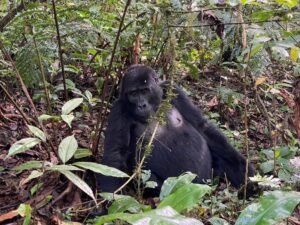
And somewhere nearby, a massive silverback is watching everything with a calmness that makes you instantly aware that you are a guest in his world.
For a few extraordinary moments, the noise of everyday life disappears.
No phones.
No traffic.
No emails.
Just you, the forest, and one of our closest relatives.
That is gorilla trekking.
So, What Exactly Is Gorilla Trekking?
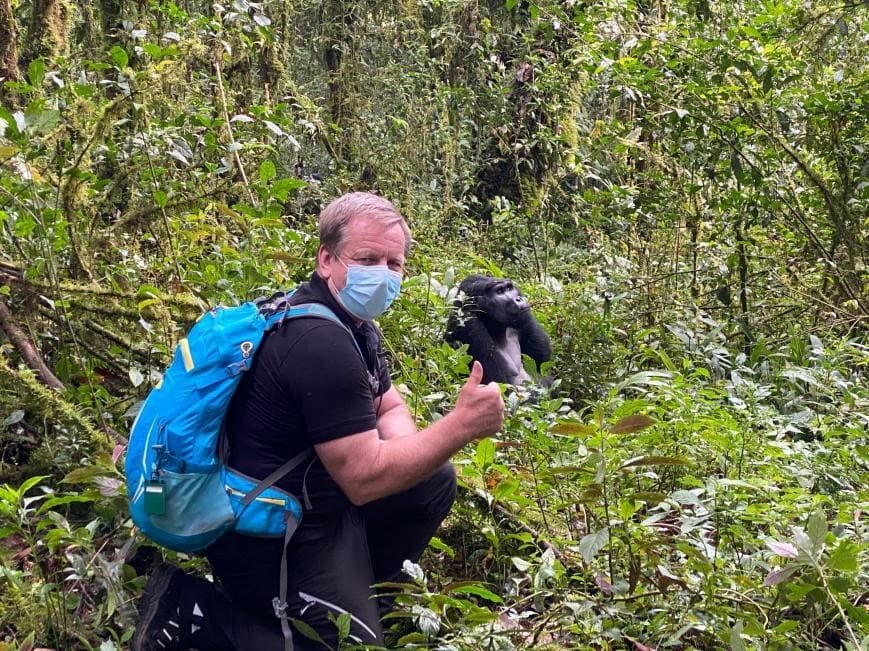
Gorilla trekking is a guided hike through tropical forests in search of wild mountain gorillas.
Once you find the gorilla family, you spend a limited amount of time observing them in their natural habitat.
It sounds simple.
It isn’t.
Finding gorillas can mean hiking through thick vegetation, climbing steep slopes, crossing muddy trails and following the clues left behind by a family that has absolutely no interest in making your day easy.
And that’s part of the fun.
You aren’t visiting a zoo.
You’re going into their home.
Mountain gorillas live in only a small part of Africa, making a trekking experience incredibly special.
The main destinations are:
- Uganda – Bwindi Impenetrable National Park & Mgahinga Gorilla National Park
- Rwanda – Volcanoes National Park
- Democratic Republic of Congo – Virunga National Park
Each destination has its own atmosphere, landscapes and trekking style.
Why Are Mountain Gorillas So Special?
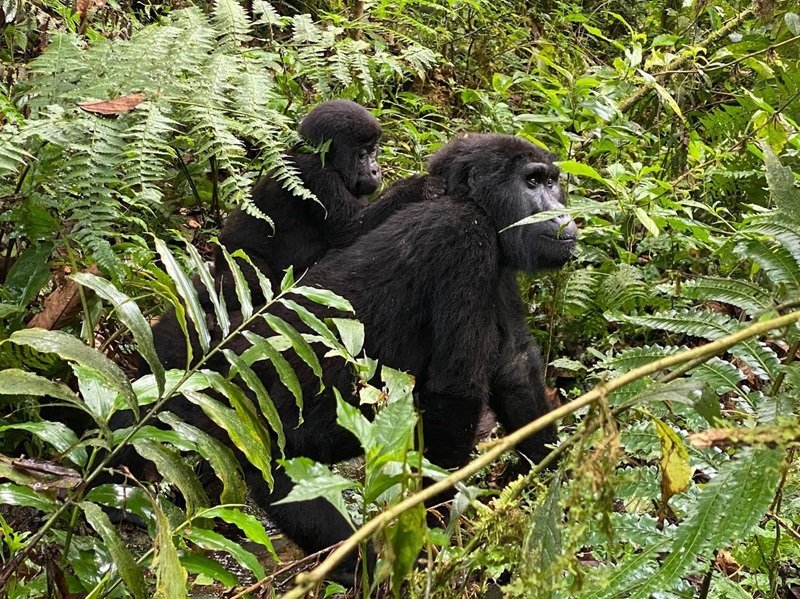
Perhaps it’s their eyes.
Perhaps it’s their expressions.
Or perhaps it’s the strange feeling that comes when you realize you’re standing just metres away from an animal that shares so much of our behavior.
Gorillas are intelligent, social and deeply family-oriented.
A typical gorilla family may include:
👑 A dominant silverback
👩 Mothers
👶 Infants
🐒 Juveniles
🦍 Other adult males and females
And they have personalities.
Some young gorillas are curious.
Some are playful.
Some seem completely uninterested in you.
And some will give you a look that feels remarkably similar to the one you get from someone who has just caught you staring.
Don’t worry. Your guide will tell you when it’s time to look away.
Where Can You Go Gorilla Trekking?
Uganda: The Ultimate Gorilla Adventure
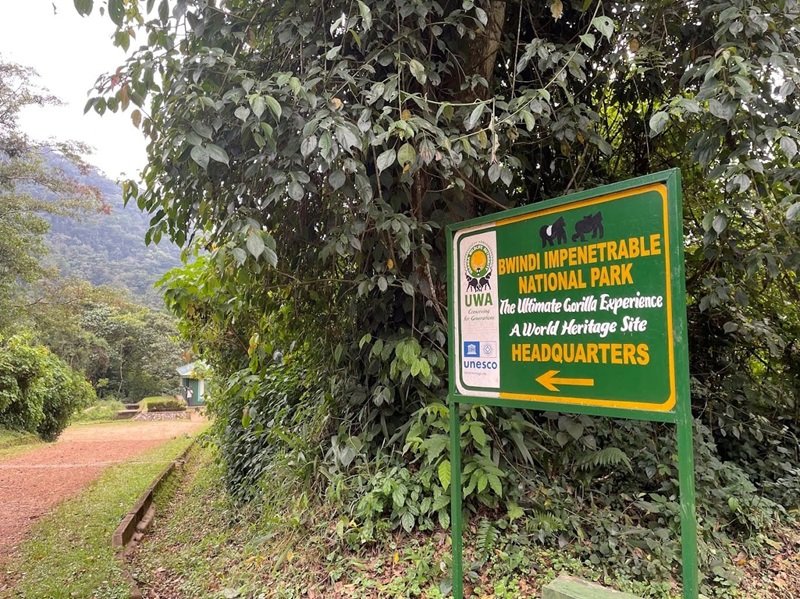
Uganda is home to a significant portion of the world’s remaining mountain gorillas, with the majority found in Bwindi Impenetrable National Park.
Bwindi feels almost prehistoric.
The forest is thick, misty, green and alive.
You don’t simply walk through it.
You squeeze through vegetation, climb slopes, listen carefully and wonder what is waiting around the next bend.
- Bwindi has four main trekking sectors:
Buhoma
One of the original and most established trekking areas.
Ruhija
Known for beautiful forest landscapes and a quieter atmosphere.
Rushaga
A popular area in southern Bwindi, including access to gorilla habituation experiences.
Nkuringo
Famous for dramatic scenery and challenging terrain.
Each sector has its own character, and where you trek can make a difference to your overall experience.
That’s why choosing the right location matters.
- Mgahinga Gorilla National Park
Smaller, quieter and beautifully dramatic.
Mgahinga sits within the Virunga mountain range and offers a different experience from Bwindi.
Here, the landscape is dominated by volcanic mountains, bamboo forests and spectacular scenery.
If you’re looking for a gorilla experience that feels a little more intimate and off-the-beaten-path, Mgahinga is worth considering.
- Rwanda: Volcanoes National Park
Rwanda’s Volcanoes National Park is one of Africa’s most famous gorilla trekking destinations.
Its major advantage?
Accessibility.
The park is relatively close to Kigali, making it possible to incorporate gorilla trekking into a shorter Rwanda itinerary.
The volcanic landscape is spectacular, and the trekking experience is well established.
For travellers combining gorilla trekking with a luxury Rwanda safari, cultural experiences or a short getaway, Rwanda can be an excellent choice.
- Democratic Republic of Congo
The Democratic Republic of Congo offers extraordinary wildlife experiences, including gorilla trekking in the Virunga landscape.
However, travel conditions and accessibility can vary, so travellers should carefully check current security and tourism conditions when planning a trip.
For most first-time gorilla trekkers, Uganda and Rwanda remain the most straightforward options.
When Is the Best Time to Go Gorilla Trekking?
Here’s the secret:
There isn’t one perfect month.
Gorilla trekking takes place throughout the year, and every season has something to offer.
☀️ June – September
The classic dry-season window.
Trails are generally easier to navigate, making this a popular period for trekking.
Expect:
- Less rain
- Less muddy terrain
- More comfortable hiking conditions
- Higher demand
If you’re travelling during this period, book your permit early.
☀️ December – February
Another popular dry-season period.
The forests are still lush, but trekking conditions are often more manageable.
This can be particularly attractive for:
- Honeymooners
- Photographers
- Holiday travelers
- First-time safari visitors
🌧️ March – May
The long rainy season.
Yes, it can rain.
Yes, the trails can get muddy.
And yes, you might finish your trek looking like you’ve wrestled with the forest.
But there’s another side to it.
The landscape is intensely green, visitor numbers can be lower, and availability may be better.
For adventurous travellers, rain doesn’t necessarily mean a bad trek.
Sometimes it means a more memorable one.
🌦️ October – November
The short-rain season can offer a nice balance between greenery, fewer visitors and manageable trekking conditions.
As always in tropical forests, however:
Weather is weather.
Pack your rain jacket.
What Actually Happens on a Gorilla Trek?
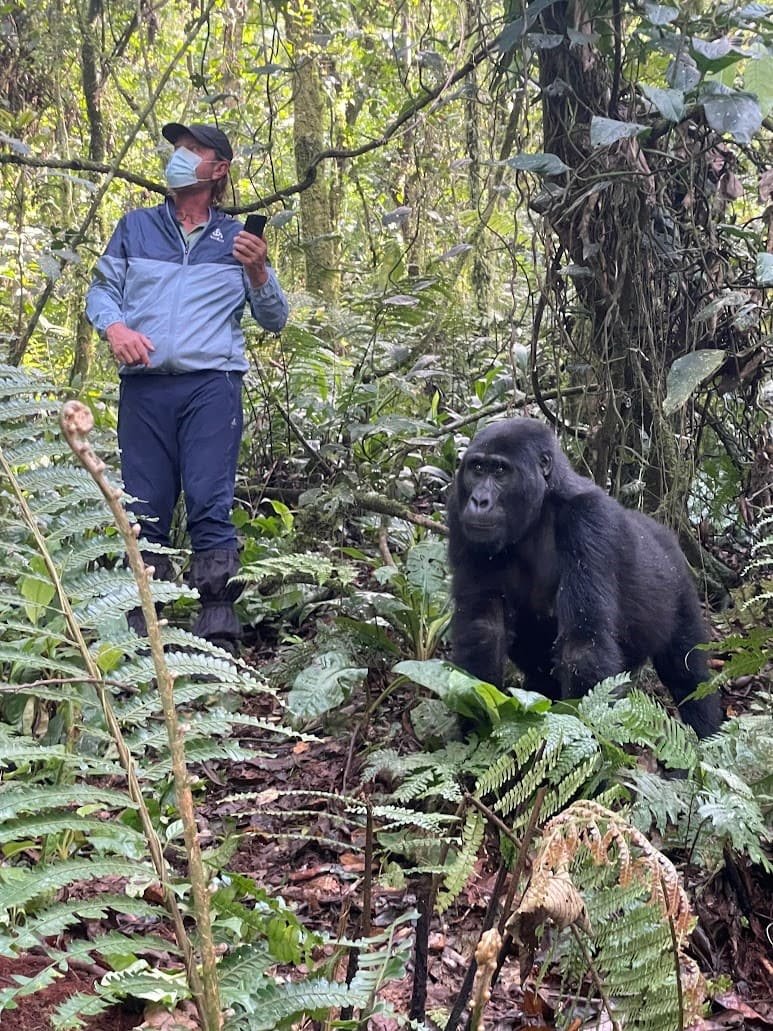
Your day normally begins early.
You’ll head to the park headquarters for registration and a briefing before being assigned to a gorilla family and trekking group.
Then comes the part nobody can completely predict.
The hike.
You might trek for a relatively short time.
Or you might spend several hours climbing through the forest.
The gorillas decide.
Not you.
Their movements, location and behaviour determine how long it takes to find them.
Along the way, your guides and trackers look for clues:
- Broken vegetation
- Footprints
- Feeding signs
- Nesting areas
- Sounds and calls
And then…
“They’re here.”
Those might be the most exciting words you’ll hear all trip.
The Moment You Meet the Gorillas
This is the part people struggle to describe.
Because photographs don’t quite capture it.
You finally see the gorillas.
Perhaps they’re feeding.
Perhaps the young ones are playing.
Perhaps a mother is holding her infant.
Perhaps the silverback is sitting quietly nearby.
And suddenly the trek, the sweat, the mud and the aching legs make perfect sense.
You sit quietly.
You watch.
And for a while, the gorillas simply go about their lives.
They don’t perform for you.
They don’t pose.
They don’t care that you flew halfway across the world to see them.
And somehow, that’s exactly what makes the experience so powerful.
What Might You See?
Every gorilla encounter is different.
You could see:
- Mothers caring for their babies
- Young gorillas playing and climbing
- Gorillas feeding on vegetation
- Social grooming
- A silverback displaying his strength
- A gorilla simply relaxing in the forest
And if you’re lucky…
You might witness something completely unexpected.
That’s the beauty of wildlife.
There are no rehearsals.
Gorilla Trekking Rules: Respect Comes First
Gorilla trekking is carefully regulated because protecting the animals comes before everything else.
Rules can vary by destination and may be updated over time, but generally include:
- Keep the required distance from gorillas
- Never touch or feed them
- Avoid sudden movements
- Don’t use flash photography
- Follow your ranger’s instructions
- Avoid trekking when you’re sick
- Keep your voice low
- Never attempt to attract a gorilla’s attention
Why so strict?
Because humans and gorillas can share diseases.
The best encounter is one where the gorillas barely notice you’ve been there.
How Much Does Gorilla Trekking Cost?
Gorilla trekking isn’t the cheapest wildlife activity you’ll ever book.
But there’s a reason.
Permits are limited, and the fees contribute toward the conservation systems that make these encounters possible.
Prices vary by country, season, experience and applicable regulations, so always confirm the current permit price before booking.
Generally:
- Uganda – often considered the best-value option for mountain gorilla trekking
- Rwanda – premium-priced, with excellent accessibility
- DRC – pricing and availability vary with tourism and security conditions
And remember:
Your permit isn’t simply an entrance ticket.
Your visit contributes to a much bigger conservation story.
What Should You Pack?
Think practical.
The forest is beautiful.
It is also wet, muddy, steep and occasionally determined to test your wardrobe choices.
Your packing list should include:
🥾 Waterproof hiking boots with good grip
👖 Long trousers
👕 Long-sleeved shirts
🧥 Waterproof rain jacket
🧤 Gardening or trekking gloves
🦟 Insect repellent
💧 Reusable water bottle
🥪 Snacks
🎒 Small backpack
📷 Camera
🧢 Hat
And one of our favourite recommendations:
Hire a porter.
A porter can help carry your bag, provide support on difficult sections and make your trek considerably easier.
More importantly, hiring a porter provides direct income to people living around these protected areas.
Your trek becomes someone else’s opportunity, too.
How Difficult Is Gorilla Trekking?
Let’s put it simply:
Gorilla trekking is an adventure, not a stroll.
You may encounter:
- Steep slopes
- Thick vegetation
- Uneven ground
- Rain and mud
- Long walking distances
But don’t let that scare you.
You don’t need to be a professional hiker.
The pace is guided by experienced rangers, and trekking groups can receive support depending on their needs.
If mobility or fitness is a concern, tell your tour operator before your trek so the right arrangements can be considered.
Gorilla Habituation: Want More Time With the Gorillas?
If one hour sounds far too short, Uganda offers something even more immersive.
Gorilla habituation.
Instead of a standard trekking encounter, habituation allows visitors to spend considerably more time with a gorilla family that is still becoming accustomed to human presence, subject to the applicable program rules and availability.
It is particularly appealing to:
- Wildlife photographers
- Researchers
- Conservation enthusiasts
- Serious gorilla lovers
- Travelers looking for something truly unique
Four hours in the forest can feel like a completely different experience.
You have more time to observe.
More time to understand.
More time to simply sit quietly and watch the family interact.
The Bigger Story Behind Gorilla Trekking
Here’s something worth remembering:
You’re not just buying a safari experience.
Gorilla tourism has become an important part of the conservation story.
Revenue from tourism can support:
- Forest protection
- Gorilla monitoring
- Veterinary and conservation programs
- Ranger activities
- Local community initiatives
- Conservation awareness
The mountain gorilla story is one of the great conservation successes of our time.
And your visit becomes a small part of that story.
So… Is Gorilla Trekking Worth It?
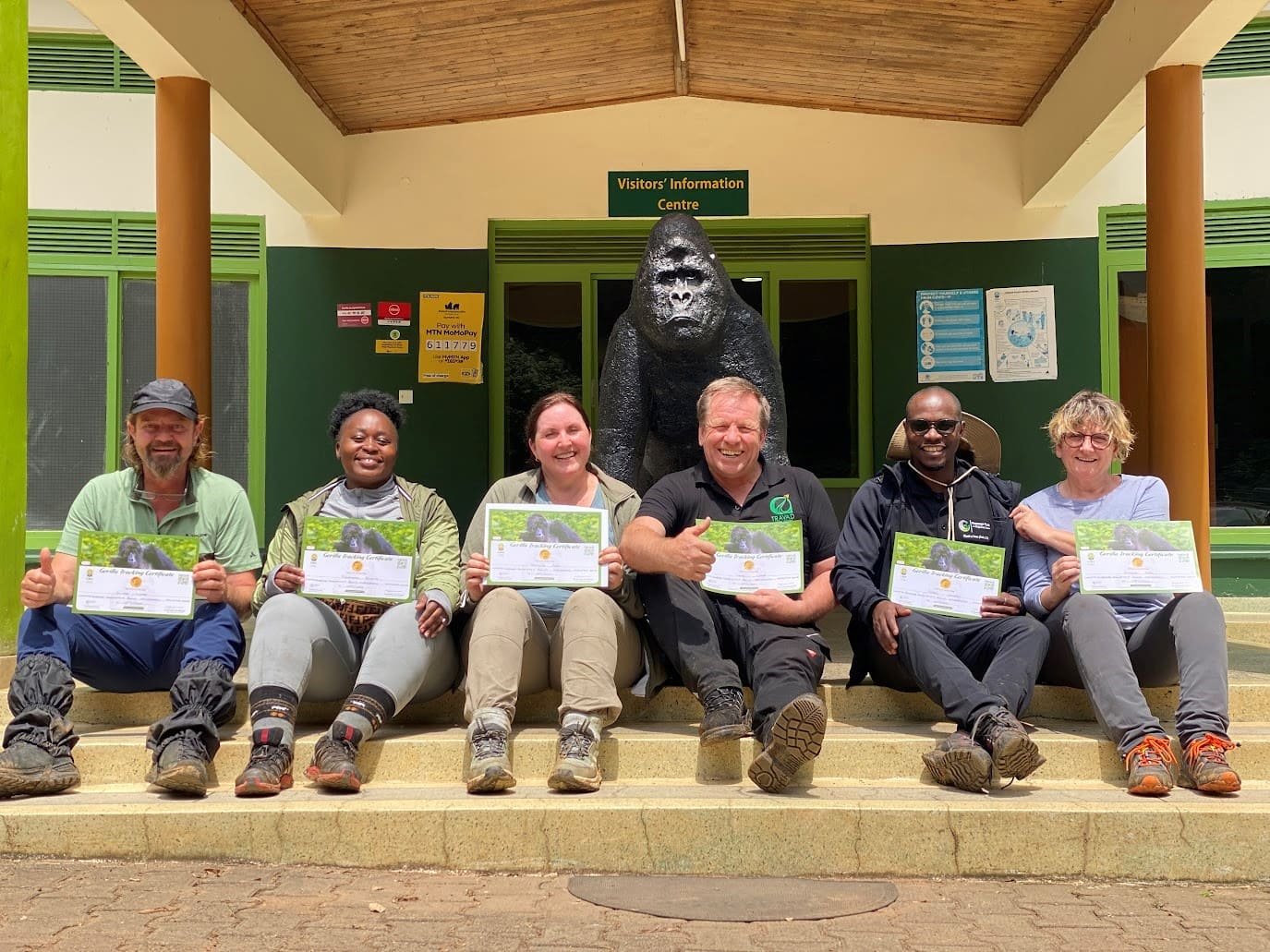
Absolutely.
But don’t expect it to be just another item on your safari itinerary.
Gorilla trekking asks something different from you.
Slow down. Walk. Sweat. Listen. Wait.
And when the forest finally reveals its secret, be present.
Because the most memorable part may not be the photograph you take.
It may be the moment you sit quietly in the rainforest and realize:
There is a wild gorilla just a few metres away—and for one extraordinary hour, you have been allowed into its world.
Ready to Meet the Gentle Giants?
Whether you’re dreaming of Uganda’s misty Bwindi forests, Rwanda’s volcanic landscapes or a wider East African adventure, the right planning can turn gorilla trekking into so much more than a single activity.
At Travad Tours Uganda, we create journeys around the experience you want—not just a list of places to visit.
Want gorillas?
We’ll build around them.
Want gorillas plus wildlife, culture, adventure and a little relaxation?
Even better.
Your gorilla story starts with one decision.
Tell us your travel dates, number of travellers, and the kind of adventure you’re dreaming about—and let Travad Tours build the journey around you.
Start planning your gorilla adventure with Travad Tours Uganda today.
Don’t just see Africa.
Feel it.
Live it.
Remember it.
Travad Tours Uganda
Your Journey. Our Expertise. Uganda Unforgettable.